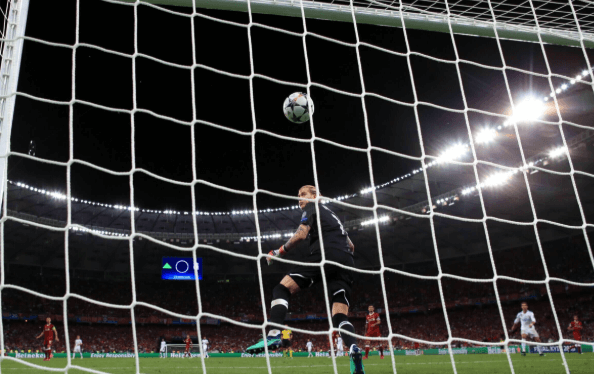
If you’ve ever watched a soccer match convinced you knew exactly how it would end, only to see the goalkeeper transform into a levitating brick wall, you’ve already tasted the chaos goalkeepers inject into predictive models. They’re the sport’s anomaly: underrated until the very moment they defy logic and reshape an entire match. In the era of predictive analytics, algorithms, and probability curves, the goalkeeper is still the one figure capable of dragging any neat statistical forecast into the mud and stomping on it with metal studs.
This unpredictability is why analysts, gamblers, and fans—including users exploring the increasingly sophisticated world of betting Ethiopia—have begun paying obsessive attention to keepers. Because once you isolate what goalkeepers actually do to the flow of a match, it becomes obvious: they aren’t just influencing predictions. They’re detonating them. And predicting football without accounting for a goalkeeper’s fingerprints is like predicting weather patterns while ignoring wind.
The Position Predictive Models Once Ignored
For decades, goalkeepers were lumped into the collective idea of “defense,” the way furniture gets lumped into “household items.” Defensive strength was measured by goals conceded, full stop. If a team gave up fewer goals, models credited the back line, the tactical shape, even the defensive midfielder—all while the goalkeeper quietly bailed everyone out with acrobatics and instinct.


But anyone who has watched even a month of soccer knows this is statistical malpractice. Two teams can concede the same number of goals yet feature wildly different levels of defensive competence. One might be a tactical masterclass. The other is chaos saved only by a goalkeeper performing like he’s auditioning for a Marvel movie.
Prediction models finally evolved, albeit grudgingly.
The Rise of xGOT, PSxG, and the Math Behind Miracles
Enter advanced metrics like Expected Goals on Target (xGOT) and Post-Shot Expected Goals (PSxG). These tools attempt to quantify how dangerous a shot really was—its angle, velocity, placement—then assess whether a save was routine or borderline sorcery.
Suddenly, goalkeepers who had been miscast for years emerged as statistical superheroes.
A keeper who consistently prevents high-probability goals doesn’t just “have good reflexes.” He breaks models. He forces prediction algorithms to adjust midseason. He pushes expected results into unexpected territory. And he becomes the variable that makes forecasting so maddeningly complicated.
Look at Jan Oblak during his prime. His PSxG numbers were so absurdly high that analysts wondered if their systems were malfunctioning. Meanwhile, Alisson Becker at Liverpool turned a habit of stopping one-on-ones into a measurable prediction-breaker. Their saves didn’t just preserve leads—they altered the math of entire leagues.
The Psychological Earthquakes a Keeper Creates
But numbers don’t tell the whole story. There’s a psychological tremor that radiates through a match when a goalkeeper denies an impossible goal. It’s almost cinematic.
A team whose keeper makes a miracle save stands a little taller afterward. The opponents—especially strikers—hesitate by a fraction of a second the next time they shoot. That hesitation affects shot quality. Shot quality affects expected goals. Expected goals affect predictions.
Models can process data, but they can’t process fear.
Penalty shootouts amplify this. Sure, penalties statistically favor the shooter, but then you place someone like Emiliano Martínez in goal, and the entire equation changes. He stares, he dances, he whispers dark poetry, and suddenly shooters crumble. Penalties that should score don’t. Tournament trajectories shift. Betting lines implode. And no model fully captures why.
The Keeper as Playmaker: The New Tactical Disruptor
While the old-school keeper’s job was to stop shots and boot the ball as far as humanly possible, the modern goalkeeper is a hybrid organism. Shot-stopper, quasi-midfielder, possession stabilizer.
Teams like Manchester City don’t just want their goalkeeper to play out of the back—they need it. The keeper becomes the first line of attack, the pressure valve against intense pressing systems, the metronome that keeps possession coherent. A goalkeeper with elite distribution reduces the number of dangerous transitions and shots against his team.
Prediction models that ignore goalkeeper distribution underestimate entire tactical systems.
The keeper is no longer just a line of defense. He’s an architect.
The Dark Side: When Goalkeepers Derail Entire Seasons
If goalkeepers can elevate prediction models, they can also torch them.
A single error-prone keeper can ruin everything the numbers expect. You know the archetype: looks nervous, misjudges crosses, fumbles routine saves, kicks the ball into an opponent’s shin for a tap-in. Predictive models initially assume randomness or bad luck. But when the errors pile up, the recalibration is swift. Suddenly, a team forecasted to finish 7th is flirting with relegation.
Goalkeepers don’t need to be disasters to warp predictions. They just need to be slightly below average.
Why Replacing a Keeper Is a Predictive Nightmare
When a striker gets injured, teams adapt. When a midfielder pulls a hamstring, the system bends but rarely breaks. But losing a goalkeeper? That shakes the foundations.
Backup keepers introduce volatility. They lack chemistry with the back line, they don’t command the penalty area the same way, and they may hesitate in moments where the starter would act decisively. Predictive models often collapse temporarily when a first-choice keeper goes down, because the position relies more on rhythm and instinct than any other.
Analytics can’t simulate confidence.
Goalkeepers as the Sport’s Last Great Mystery
Combine all of this—shot stopping, distribution, psychological disruption, overperformance, underperformance, injuries—and you arrive at the real truth:
Goalkeepers are the biggest prediction disruptors in the sport.
They are the variable data scientists fear and fans adore. They are the pair of gloves that can bend a league table. They are the reason expected goals don’t always become real goals. And they are the last reminder that even in an era obsessed with quantifying everything, soccer still has room for chaos, instinct, and heroism.
Goalkeepers are proof that the sport is still human.A well-struck shot may obey physics.
But a great save?
A great save obeys nothing at all.